
What to Check Before Paying for a New Website
Paying for a new website is a serious business decision. A good website can help you win enquiries, explain your services clearly and support your marketing for years. A poor one can leave you with a nice-looking page that is hard to update, difficult to rank, expensive to maintain and unclear for customers. Before you agree to a quote, there are a few things worth checking properly.

Start by Checking What the Website Is Meant to Do
Before comparing prices, make sure you know what the website is supposed to achieve. A brochure website, lead generation website, ecommerce store, booking website and membership platform all need different planning. The cheapest quote may only look cheap because it does not include the things your business actually needs.
For most service businesses, a website should help visitors understand who you are, what you offer, where you work, why they should trust you and what they should do next. If the proposal only talks about design and page count, it may not be thinking far enough ahead.
This is why professional web design starts with purpose. The layout, copy, images, calls to action and page structure should all support the reason the website exists. A site built only around appearance can look good on launch day but still fail to generate enquiries.
Ask for a Clear Scope Before You Pay
A proper website quote should explain exactly what is included. If the scope is vague, it becomes much easier for misunderstandings to appear later.
At minimum, you should know:
- How many pages are included
- Whether the design is bespoke or template-based
- Whether copywriting is included
- Who supplies images
- Whether contact forms are included
- Whether SEO basics are included
- How many rounds of revisions are allowed
- What happens after the website goes live
There is nothing wrong with a simple website package if that is what you need. The issue is not simplicity. The issue is paying for one thing while assuming you are getting another.
A good proposal should remove uncertainty. You should be able to read it and understand what will be built, what it will cost and what is expected from you.
Check Whether Content Is Included
Content is one of the most common causes of website delays. Many businesses accept a quote assuming the web designer will write the wording, only to find later that the client is expected to provide all of it.
Supplying your own content can work if you are comfortable writing clearly about your services. For many businesses, though, it is harder than expected. A website needs headings, service descriptions, calls to action, trust-building content and answers to the questions customers usually ask before buying.
If content is not included, ask what support is provided. Will the designer give you a page structure? Will they advise on what each page should say? Will they edit what you provide? Will they optimise the content for search engines?
This matters because content and structure affect SEO. A website can be visually polished but still struggle to rank if the pages are thin, vague or missing the terms your customers actually search for. If search visibility is important, ask whether SEO services are part of the project or whether they are quoted separately.
Confirm Who Owns the Website
Before paying for a website, check who owns the domain, hosting account, website files, content and design once the work is complete.
You should know whether:
- The domain is registered in your name
- You will have administrator access to the website
- You can move the website to another host if needed
- You own the written content and images supplied for the site
- There are any licence restrictions on the design or plugins used
This is especially important when a website is sold on a monthly subscription. Some arrangements are perfectly fair, but you need to understand what happens if you stop paying. Do you keep the site? Can you export it? Do you lose access? Are there cancellation terms?
A good supplier should be clear about this. If ownership is difficult to understand before you pay, it is worth asking more questions.
Check How the Website Will Be Built
Not all websites are built the same way. Two quotes can describe a “professional website” but involve very different levels of work.
Some websites are built using pre-made templates with limited customisation. Others are custom designed and developed around the business. Some rely heavily on page builders and third-party plugins. Others use cleaner code and more controlled development. None of these options are automatically wrong, but they are not the same product.
If you are paying for a serious business website, ask how it will be built and why that approach is suitable. A custom WordPress development project should give you a site that is easier to manage, better structured and more suitable for long-term growth than a rushed template setup.
You do not need to understand every technical detail. You do need to understand whether the website is being built for your business or simply assembled from whatever is quickest.
Make Sure Mobile and Speed Are Included
A modern website must work properly on mobile. That should not be an optional extra. Many visitors will view your site on a phone first, especially if they are searching for a local service, comparing providers or looking for a quick way to contact you.
Ask whether the site will be tested on different screen sizes. Check whether forms, menus, buttons and images will be properly optimised for mobile users.
Speed also matters. Slow websites frustrate visitors and can reduce enquiries. They can also make SEO harder. Large image files, unnecessary scripts, bloated page builders and too many plugins can all affect performance.
If performance is important to you, ask the supplier how they approach page speed, image optimisation and Core Web Vitals. If the answer is vague, that is worth noting.
Ask What SEO Means in the Quote
Many website quotes mention SEO, but the word can mean very different things. Sometimes it means the site will have basic title tags and descriptions. Sometimes it includes proper keyword research, service page planning, internal linking, technical SEO, local SEO and content structure.
Before you pay, ask what is actually included. A sensible SEO foundation should usually cover:
- Page titles and meta descriptions
- Clear heading structure
- Search-friendly URLs
- Image alt text
- Fast, mobile-friendly pages
- Internal links between relevant pages
- Submission to Google Search Console
- Basic schema where appropriate
If you are targeting local customers, you may also need location pages, Google Business Profile optimisation and content that matches local search intent. For example, a business targeting Hertfordshire may benefit from a properly written local page such as web design in St Albans or SEO services in St Albans, rather than trying to make every location fit onto one generic page.
Understand the Revision Process
Most website projects involve some changes. That is normal. The important thing is knowing how revisions are handled before the project begins.
Ask how many review stages are included, how feedback should be provided and what counts as a revision. A small wording change is different from changing the entire structure of a page after it has been built.
A clear revision process protects both sides. You know when you can give feedback, and the designer can keep the project moving without endless changes that were never part of the original scope.
Check What Happens After Launch
A website does not stop needing attention once it goes live. WordPress updates, plugin updates, backups, security checks, performance monitoring and small content changes all need handling.
Ask whether any post-launch support is included. For example, do you get a handover? Is training provided? Are bugs fixed for a short period after launch? What happens if a form stops working, a plugin update causes a problem or you need a small change?
Many businesses do not want to manage the technical side themselves. In that case, a website maintenance plan may be worth arranging from the start. It is usually easier to prevent problems than to fix them after something has broken.
Compare Value, Not Just Price
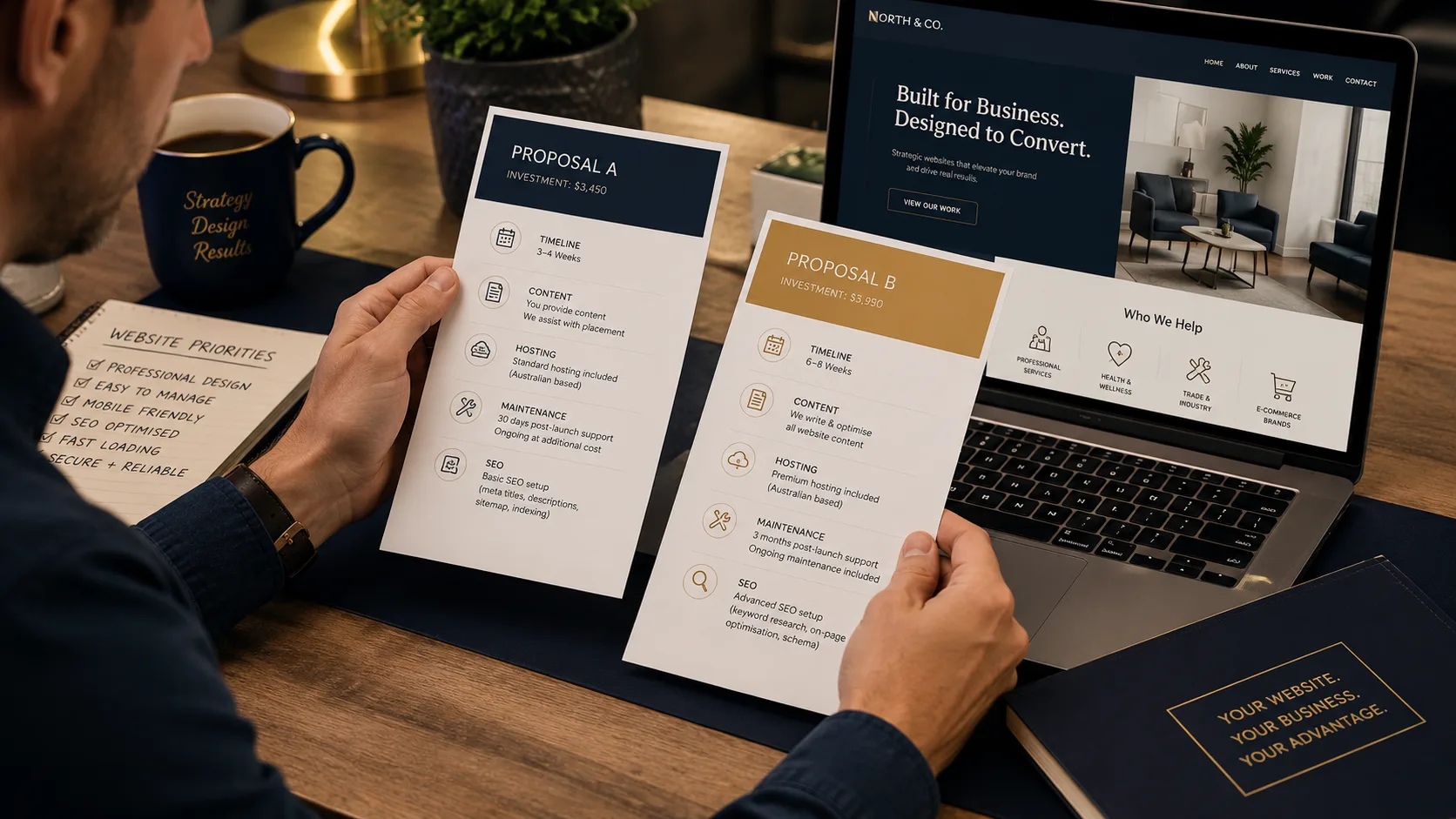
It is sensible to compare prices, but price alone does not tell you much unless the quotes include the same things. One quote might include planning, design, development, SEO setup, copywriting guidance, testing, launch support and maintenance advice. Another might include only a basic page build.
When comparing website quotes, look at what each one gives you in practical terms:
- Will the site help customers understand your services?
- Will it be easy to update?
- Will it be fast and mobile-friendly?
- Will it be structured properly for search?
- Will it make enquiries easier?
- Will there be support after launch?
If you are unsure what a fair price looks like, our guide to how much a website costs in the UK explains the main factors that affect website pricing.
Look at Previous Work
Before choosing a supplier, look at examples of previous projects. A portfolio will not tell you everything, but it gives you a sense of the design quality, range of work and level of detail.
When reviewing a website portfolio, do not only look at whether the screenshots are attractive. Ask whether the sites appear clear, easy to use and suitable for the type of business they represent. A good website should feel appropriate for the client, not just impressive in isolation.
Make Sure the Website Is Built Around Enquiries
If you are a service business, your website should make it easy for visitors to enquire. That means clear calls to action, visible contact routes, sensible page structure and enough trust signals to help people feel comfortable getting in touch.
This is one of the most important checks before you pay. A site can look modern and still fail if visitors do not know what to do next. If your current site already gets traffic but does not generate leads, read our guide on why websites get visitors but no enquiries.
If you are starting a new business and need more than a standalone website, it may also be worth considering a wider package covering branding, web design, SEO foundations and marketing setup. Our complete business start-up package is designed for that type of project.
Final Thoughts
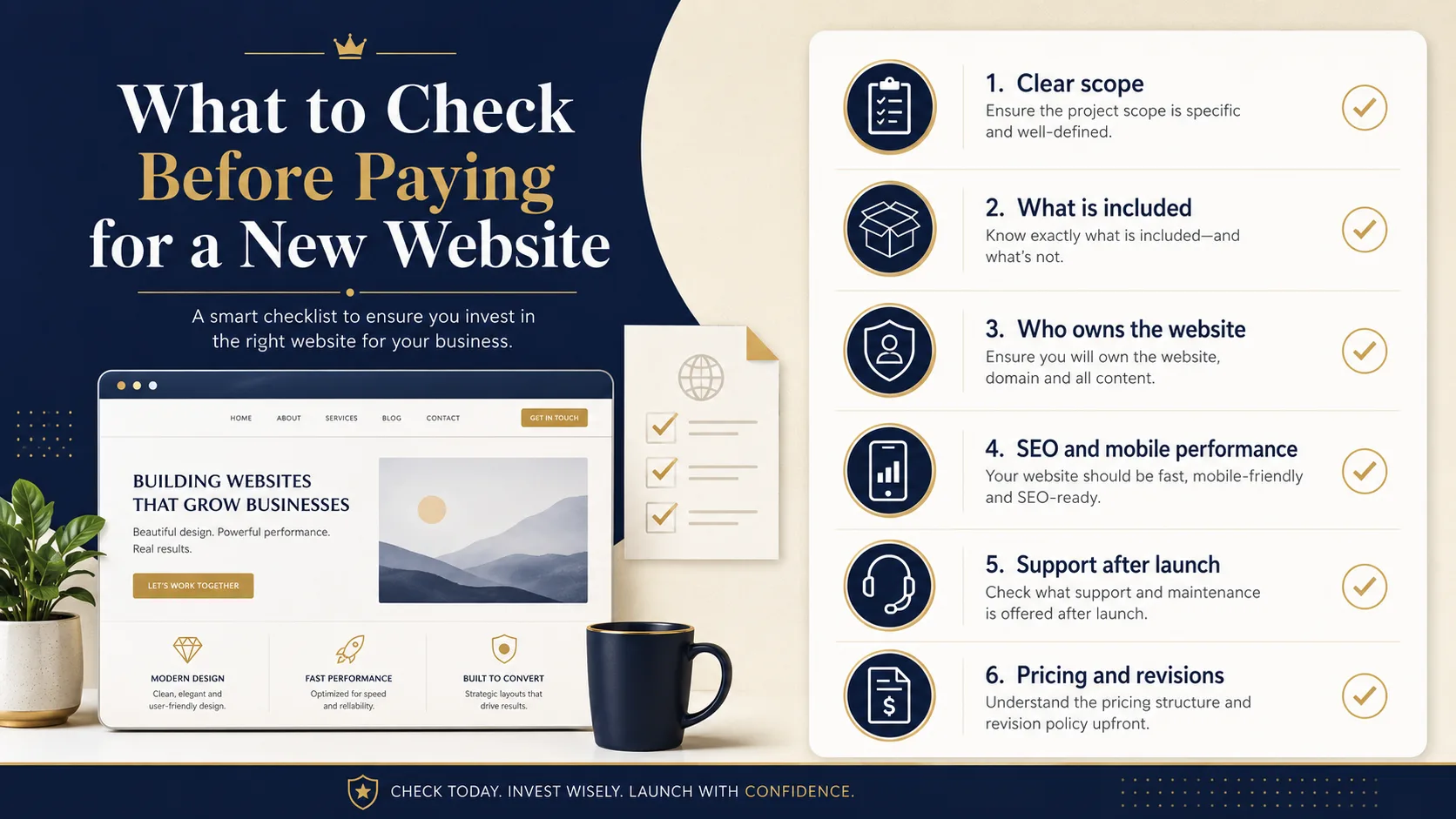
Before paying for a new website, take time to understand exactly what you are buying. A good website project should have a clear scope, sensible structure, proper ownership terms, mobile and SEO considerations, realistic pricing and support after launch.
If you are still comparing options, our main web design services page explains how Webtex plans and builds professional business websites around clarity, trust and enquiries.
The right website supplier will not rush you into a decision. They will explain what is included, point out anything that may affect the project and help you choose the option that makes sense for your business.
Planning a New Website?
Webtex can help you understand what you need, what should be included and what level of website is right for your business.


